Back to Author Profile
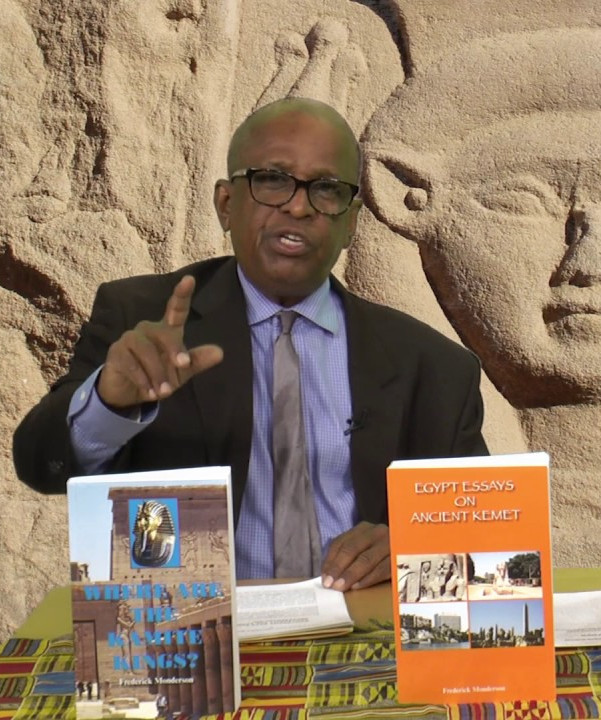
Dr. Frederick Monderson

Dr. Frederick Monderson

Complete Library • 6 Published Works

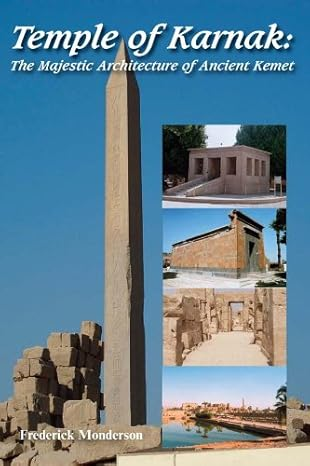
Temple of Karnak: The Majestic Architecture of Ancient Kemet

Temple of Karnak: The Majestic Architecture of Ancient Kemet

Temple of Karnak: The Majestic Architecture of Ancient Kemet offers readers a comprehensive artistic, historical and esoteric insight into this important religious structure instrumental in the history of imperial Egypt/Kemet. The Temple of Karnak is a full-length English language book on the ancient world's grandest home of a deity, still standing despite its many man-made and natural challenges. Insightfully, it depicts the historical, pictographic, architectural and archaeological adventures of a temple 2000 years in the making; that today, 2000 years later, still exudes and evokes much of the ancient mysticism, spirituality and awe-inspiring esotericism. Together with more than 400 photographs, illustrations and plans highlighting the more salient features of this divinely inspired complex of temples, readers are treated to an extensive bibliography in English to encourage further research on this architectural museum, making it an indispensable read and therefore a welcome addition to any library collection. It supplies readers with both photographic imagery and textual survey of a quintessential Middle and New Kingdom temple, home of the national God Amon-Ra, 'King of the Gods,' 'Father of the Gods,' ancient Egyptians considered the 'Throne of the World.' Key Features: - Two poems to Amon-Ra and the temple itself - A 'Why and Wherefore' of the philosophy of ancient Egyptian religion manifesting at Karnak - A compendium of famous writers' insights - Detailed description of the principal features of the temple in the ascent towards the 'holy of holies' and beyond - A selection of some of the choicest pieces of 'talatat art' from the Open Air Museum - Photographic depiction of the Hypostyle Hall's temple ritual and its architectural columnar majesty - The Wars of Seti I - Thutmose III's Festival Temple the Ankh Menu's tent pole columns - Rameses II's 'Girdle Wall' illustrations - Images highlighting points of principal interest: sphinxes, pylons, colonnades, obelisks, statues, the sacred lake, courts, axes, temples, walls, decorations, etc. - Names of people associated with the site A 'second take' on principal segments of the monuments with separate bibliography extends the source of reference and contributes to further understanding of this magnificent and complex piece of religious architecture. It's not simply a historic description of the structure but also an indispensable travel guide heightening the adventure and significantly complementing any visit to the temple. Photos enliven the experience and reinforce the rich heritage of the monuments while including items the casual visitor never sees. The traveler, the specialist, student and lay person can all benefit from this work that should be in any library collection on Ancient Kemet/Egypt.

$22.6masonic history
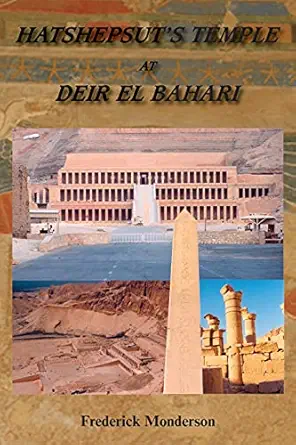
Hatshepsut's Temple at Deir el Bahari

Hatshepsut's Temple at Deir el Bahari

Hatshepsut's Temple at Deir el Bahari is considered a wonderful experiment in ancient Egyptian art and architecture; as such it is a uniquely remarkable structure built in white limestone that's a sight to behold. More important, this work provides some insights into the men and a woman, avant-garde in their thinking and actions at a time when females dared not rule! However, given the opportunity, Queen Hatshepsut ruled well and was involved in many remarkable adventures and building projects, chief of which was her mortuary temple at Deir el Bahari, on the west bank at Thebes that also highlights a diplomatic voyage to Punt on the East African coast; one of many remarkable experiences recorded for posterity. This wonderful structure, unique in many ways, was a classic in its days of active use and though time and man have taken some toll, it still radiates with magical, mystical, artistic splendor, millennia later. A three story structure when one was the norm, use of alternating columns and pillars in colonnade form, hundreds of statues of the Queen in various attitudes, art in remarkable raised and sunk reliefs, the earliest bequeathed anthropological study in history, shrines to several gods, employing a creative and innovative concept to justify divine right to rule, choice of a remarkable location for its construction, employment of line and space over distance, while employing ramps, courts and colonnades all magnificently blended and juxtaposed against the mountain as a backdrop. Exquisitely utilizing a nearby Middle Kingdom prototype as transition linking Old with New Kingdom building creativity, all have made this temple not simply the envy of the ancient world; it is a remarkable tourist attraction that leaves visitors breathless and in wonder at this classic piece of monumental architecture which salutes its architect Senmut, an avant-garde revolutionary genuinely motivated by love of a beautiful lady. This work consists of two poems to God Amon-Ra and the temple of Deir el Bahari itself, an Overview, Introduction, essays on Hatshepsut and Senmut, reports on discovery of Mummies in the Deir el Bahari 'Cache' of 1881, and conclusions by the author. In addition, it contains published reports written more than a hundred years ago when the Swiss Egyptologist Edouard Naville excavated the temple in the 1890s. Even more, some two dozen illustrations and many photographs, some old and new and others taken from the temple's 'bird's eye view' on the mountain top (no longer possible), descending the mountain, as well as the ascent into and highlighting the structure's ramps, colonnades, shrines, walls, courts and its wonderful artistic depictions towards the middle and upper terrace at the mountain's base where resides its 'Holy of Holies' Sanctuary. The photographs are designed to 'let the monuments teach' and as such, they highlight the art and architectural wonder of the temple, magnificence of the architect's creation of art and architecture that blends beauty with ancient mystical spirituality; and as such, this work is considered a significant guidebook for students, specialists and lay people as well as for tourists.

$24.95masonic history
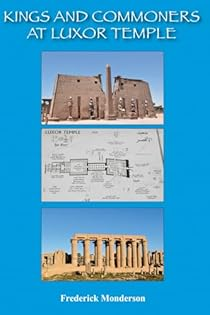
Kings and Commoners at Luxor Temple: Divine Architectural Glory Recaptured

Kings and Commoners at Luxor Temple: Divine Architectural Glory Recaptured

Recognizing the fact, 'no building on earth corresponds to the Temple of Luxor,' Kings and Commoners at Luxor Temple is a superb contribution to the genre of examining, explicating, and highlighting many features and factors that contributed to the metaphysical re-creation achieved in this citadel of theological and spiritual symbolism, artistic and architectural magnificence, and aspirant cosmic and metaphysic realization in humanity's search for salvation in this existence and the one beyond. The author's contention is supported through a number of images including photographs and quoted descriptions, all seeking to explore, examine and highlight this 'god' or 'worship temple's' function that boasts human and divine imagery and cosmic connections; architectural and artistic picturesque excellence; that to this day still exudes religious and spiritual elixir; demonstrates spatial coordination in choice of site, axial orientation and mathematical exactness that encourages divine forces to come and inhabit their home, a phenomenon that graces the Luxor city-skyline in its empirical beauty. This work examines the crowning respite for cultural celebration inspired through ritual and prayer in procession while transporting barks and boats in accompaniment of instrumental and choral musical expression, celebrative dancing, ritual offerings and feasts, with flowers grasped in adoration by processional participants, held and thrown by admiring onlookers as the joyful parade passed by; all with and beside the ever-moving processions of priests, divine barks being towed, royal chariots being driven, soldiers and religious revelers seeming spiritually intoxicated while marching in step and dancing, swaying, enjoying every moment of this once a year, New Year's Day festival. Key Features Examined: 1. Capture of the festive departure from Karnak Temple 2. Images of the Avenue of Sphinxes route, excavation, clearance, and reconstruction evidence 3. The Exterior Court before the Great Pylon with principal builders' Cartouches 4. The restored temple face with four standing statues of Rameses beside his two seated statues and the Eastern Obelisk 5. The Court of Rameses II, 'renamed' the 'Ramessean Front' 6. The stupendously magnificent Processional Colonnade and Opet-festival celebrations 7. The Colonnade majesty of the Sun Court of Amenhotep and the 'Luxor Cachette' location 8. The monumentality of the Hypostyle Hall, viewed from interior and exterior faces 9. The Roman Sanctuary south of the Hypostyle Hall, creating three Sanctuaries 10. The mystical and magical nature of the 'Miraculous Birth of King Amenhotep III' 11. Inner Southern sanctuaries designed for worship of Amenemope, Amon-Ra, and Amenhotep III

$59.95masonic history
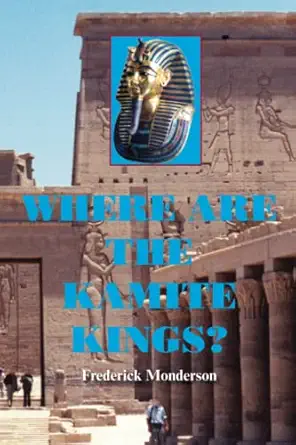
Where are the Kamite Kings?

Where are the Kamite Kings?

WHERE ARE THE KAMITE KINGS? Have you ever wondered 'Where are the Kamite Kings?' and 'Where have they left evidence of their existence?' Are you in need of a Short History of Ancient Egypt from the Prehistoric to Late Periods? If perhaps you have been to Egypt before, can photographic images help remind you of the wonderful sites you encountered on that memorable outing? If not, can these photographs entice you to hurriedly go on that visit? Where are the Kamite Kings? is written within the context of exploring locations across the historical landscape where respective kings have left evidence of their names. Though time and man have destroyed much, sufficient remains still permit painting a cohesive history of Egypt. Table of Contents: Introduction; Predynastic Kemet/Egypt; The Archaic Period I; The Archaic Period II; Methodology I; Methodology II; The Old Kingdom; The First Intermediate Period; Science; The Middle Kingdom; New Kingdom: Politics, Priesthood, Culture and Architecture; The New Kingdom and the Eighteenth Dynasty; The Nineteenth Dynasty; The Great Temple of Karnak; The Temple of Luxor; The Ramesseum of Rameses II; Medinet Habu Temple of Rameses III; The Tomb of Seti I; The Tomb of Rekhmara; and The Ethiopian Ascendency. Beginning in the Prehistoric Badarian, Amratian and Gerzean or Naqada I and II culture sequence, kings from Narmer to the Ethiopians have been identified in graphics and images. Places where kings' names have survived in civil areas, religious and mortuary structures, on papyri, etc., have been pointed out. First and foremost, the author holds, the rise of civilization in Egypt is traceable to antecedents in Upper Egypt and Nubia/Ethiopia/Central Africa from which the Nile's cultural effluence flowed. Second, and equally interesting, the author recognizes the potency of names and naming. Modern 19th Century scholarship on Egypt emphasized Graeco-Roman names, as for example, Egypt for Kemet; Cheops, Chephren and Mycerenius for Khufu, Khafre, and Menkaure; Diospolis Parva and Thebes for Waset; Amenophis for Amenhotep; and Tuthmosis for Thutmose; such was a skillful attempt in the overall conspiracy to move Egypt out of Africa and Africans out of Egypt. Since the present work ends with the Ethiopians, Graeco-Roman names are not apropos, except where reference is made to such temples as Isis, Edfu, Kom Ombo, Esneh, etc. Still, photographs, plans and illustrations are included, enhancing the visual image of the wide diversity of the culture, created by these Kamite Kings. Therefore, in answer to the title, 'Where are the Kamite Kings?', this work provides some of the answers while recognizing a whole lot more could have been included, since much of the culture's artifacts are dispersed globally. This work is useful to the general reader, student and expert alike, providing comprehensive visual documentation and scholarly analysis of Egypt's Kamite rulers and their enduring legacy.

$39.95masonic history
Who Were the Ancient Egyptians?

Who Were the Ancient Egyptians?

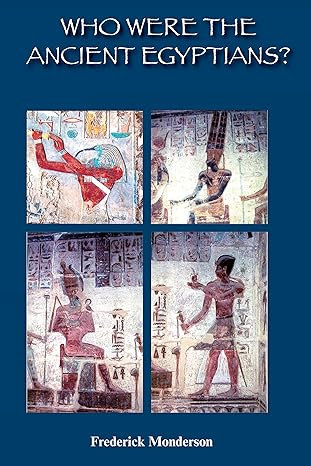
WHO WERE THE ANCIENT EGYPTIANS? Omission and distortion feature prominently in propagation of Ancient Egypt which begs the question 'Who were the Ancient Egyptians?' That 'Ancient Egyptians were Caucasians' who migrated from South-West Asia possessing a 'superior mental attitude,' and ultimately formed a 'white ruling class lording it over a black lower class' who did all the work is clearly incorrect. More correctly, Blacks initially called ANU founded cities as An, later Heliopolis of the Greeks and Romans, Erment and Esneh, etc. They laid the foundation for an emerging society, ultimately to later erect pyramids, raise obelisks, even construct temples and tombs. Such creativity helped Narmer in his conquest to establish a kingship system with state apparatus. He was able to craft theological and theosophic dynamics inherent in the religion that lasted throughout dynastic rule. In response to this prevailing falsity, 'Who Were the Ancient Egyptians?' is a small corrective to the provocative question, supplied in hundreds of photographs, a substantial Bibliography and Index to enable young scholars crafting intellectual autonomy in their challenge to misinformation. The 19th Century French Egyptologist George Foucart declared the 'earliest Egyptologists made mistakes in their interpretation of the evidence;' in response Dr. Leonard James insisted 'the mistakes were deliberately implanted.' Cheikh Anta Diop in The African Origin of Civilization: Myth or Reality demolished the falsity of a 'Caucasian Egypt,' providing a mountain of modern and classical evidence to support his position that the Egyptians were indigenous African, Black people. In 'Peopling of the Nile Valley,' UNESCO in 1974 upheld Dr. Diop's and Dr. Obenga's well-researched presentations declaring, 'Egypt was an African and Black civilization.' Today, books on Western Civilization begin with a chapter on Ancient Egypt when previously such began with Greece and Rome. In the age of antiquity, Africans were marching along civilization's illustrious paths, blazing a creative legacy through Kingship, religion, art and scientific experimentation, thereby enlightening the world. This work provides essential corrective scholarship to defend the truth about Ancient Egypt's Black African origins.

$39.95masonic history
Ancient Egypt Synthesis: An Inside Look Into Ancient Egypt

Ancient Egypt Synthesis: An Inside Look Into Ancient Egypt

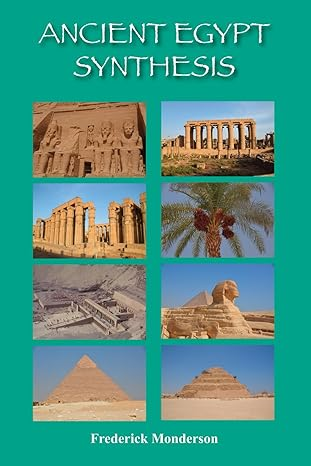
ANCIENT EGYPT SYNTHESIS - is an attempt to highlight some important cultural themes, instructions, and monuments as well as persons who have impacted on Nile Valley culture that has so fascinated and influenced later growth of civilization across the globe. That influence has manifested in architectural and artistic expression, religious and monarchical practices, cosmological and monarchical pageantry, and divine representation giving rise to outstanding individuals, men and women, who contributed their thoughts, time and energies to make this early experiment in human creativity the success it is. Naturally, the question of who were the ancient Egyptians gets some consideration but the Priesthood who molded and perpetuated the significant aspects of divine ritual, kingly worship, and building and craftsmanship gets its attention as well. The foundation of the system of Ancient Egypt was kingship and this too is part of the picture. However, the architecture of Egypt, as represented in its religious, temple architecture, is best expressed in the Temple of Luxor, that magnificent structure embodying 'the great glory of Egypt' and this wonderful classic structure is highlighted in both textual and photographic imagery. Table of Contents: Wisdom of Ancient Egypt; Abydos – Site of Eternal Consciousness; Obenga: Egypt Synthesis – Religion; Narmer: Poem to Luxor Temple; The Grand Lodge - Luxor Temple; Esoteric Symbolism of Luxor Temple: Luxor temple: Architectural Techtronics; Thoughts on Interpreting Egypt; Taharka the Ethiopian; Coronation of the King of Egypt; Death and Disposal of the Dead; Two Grand Ladies: Triads, Ogdoad and Enneads; Thoth and Horus; and The Priesthood.

$39.95masonic history
base44
Edit with Base44